Structural Drying in Franklin, TN
After river flooding, a main break or an indoor leak in Franklin, the drying team places dehumidifiers and air movers and keeps them running until the framing reads dry.
(888) 849-5796Get the drying equipment set- LGR dehumidifiers
- Daily psychrometric logs
- 24/7 dispatch
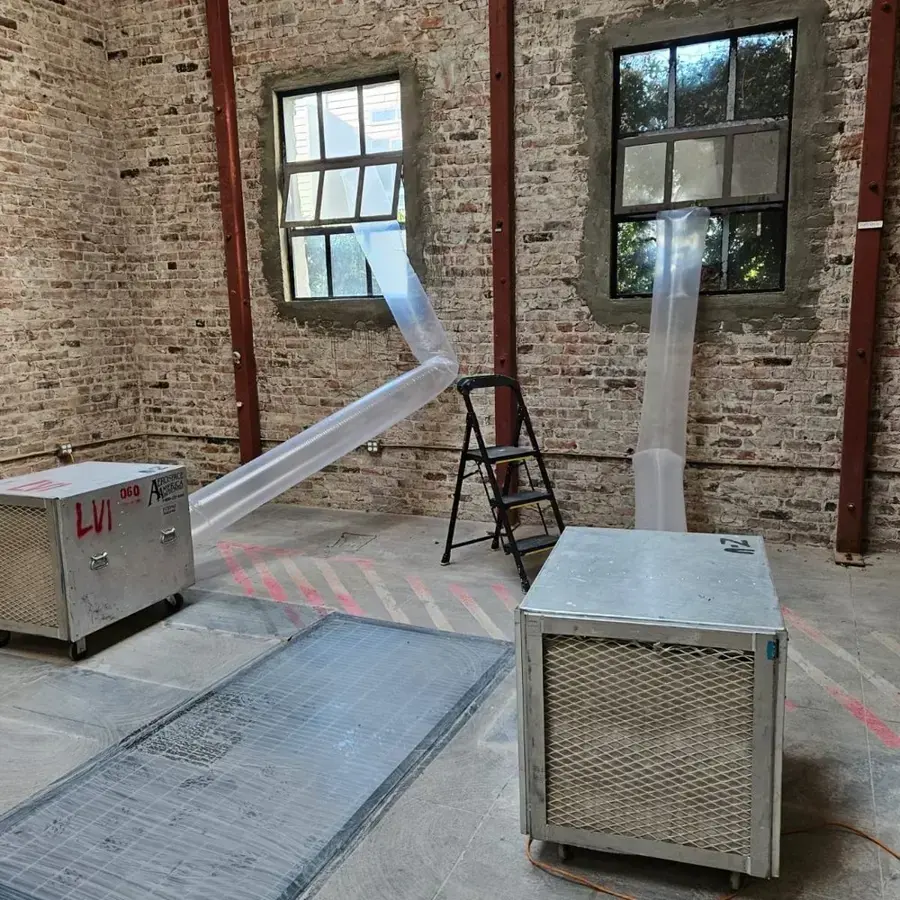
First steps for structural drying in Franklin
- 1
Keep the doors closed
A closed room holds the dry air where it does its work.
- 2
Leave equipment running
Fans and dehumidifiers should not be switched off between visits.
- 3
Keep the thermostat steady
Steady temperatures help the equipment dry the materials evenly.
- 4
Log what you see
Note musty smells, spreading stains or new damp spots.
How structural drying is handled in Franklin
Setting the drying class
The tech classifies the loss by how much of the building is wet and how absorbent the materials are, which sets how much equipment goes in.
Placing the equipment
Air movers go along walls and floors, and LGR dehumidifiers hold the humidity low so water leaves the materials.
Measuring every day
Readings of temperature, humidity and moisture in the materials show whether the equipment is working.
Moving and removing equipment
Units shift to the wettest areas as dry spots clear, and leave only after the materials reach their dry targets.
What does structural drying cost in Franklin, TN?
Structural drying in Franklin usually runs $1,200 to $10,000. One or two rooms sit low, while hardwood or Class 4 materials sit at the top.
The drivers are the water category, the square footage that got wet, the material class and how fast drying started. The water damage cost calculator gives a planning range; a firm number comes after the walkthrough.
How structural drying moves from wet to dry
- 1
Map the wet zone
Meters outline what is wet.
- 2
Place the equipment
Units go where the water hides.
- 3
Monitor every day
Readings track the progress.
- 4
Release the units
Equipment leaves at dry targets.
Drying is not finished when a room feels dry. Moisture hides in wall cavities, subfloors and framing, and Franklin has several reasons for it to be there, from the Harpeth River to a main break.
After river flooding or a main break
Water from the Harpeth River, which crested at 35.32 feet in May 2010, and plumbing failures inside a building both leave moisture in wall cavities, subfloors and framing. It can stay there long after the surface looks dry.
Wall cavities are the usual hiding place. Water slides down inside a wall and collects on the bottom plate, where paint and drywall hide it for days.
Older buildings in historic areas
Envision Franklin aims to preserve the character of historic areas, and older buildings protected by city ordinances can have dense old framing and tight spaces. The drying team sizes equipment to the materials in front of it and does not assume a modern wall.
Equipment placement matters more in a historic building, since the tech may need to avoid cutting into original finishes and use drilled vents or low-profile units instead.
How drying is proven
- Daily readings of temperature and humidity.
- Moisture meter checks on framing and subfloor.
- A final log in the claim file.
Water extraction comes first, and drying follows.
Clean-water jobs can finish in about three to five days, while hardwood and dense framing take more time.
Emergency dispatch for Franklin, TN
The drying team dispatches around the clock for structural drying in Franklin homes and businesses.
Structural drying across Franklin, TN
Crews serve all of Franklin in ZIPs 37064, 37067 and 37069, from Downtown Franklin and Main Street out to Cool Springs and the neighborhoods around Mack Hatcher Memorial Parkway.
See every area servedStructural Drying and Dehumidification questions in Franklin, TN
Water still coming in?
The Franklin restoration crew dispatches day and night, weekends and holidays included.
Describe the damage to a Franklin proHow do I know a house is truly dry?
Meters, not feel. Materials are compared to dry reference readings, and equipment stays until they match.
Is a store dehumidifier enough?
A household unit cannot match LGR dehumidifiers, and without air movers and readings the structure stays damp.
Why are my utility costs higher during drying?
Fans and dehumidifiers draw power. The added electricity may be part of a claim, so ask your insurer.
Why is the room so warm and loud?
Dehumidifiers add heat and air movers run steadily, which is the equipment working as designed.
Can drying take longer than five days?
Yes. Hardwood, soaked framing and heavy materials can take longer, and the readings decide.
Does drying prevent mold?
Fast drying removes the damp that mold needs. Growth can start within 24 to 48 hours of a soaking, so speed matters.
Can I dry just the carpet?
Carpet is only the top layer. The pad, subfloor and wall bases below also hold water, so drying only the surface leaves damp behind.
Need your Franklin home dried?
Call now. The drying team sets the equipment, takes readings every day and removes it when the structure reads dry.