Finished Basement Flooding in Franklin, TN
When water reaches a finished lower level in Franklin, the extraction crew empties it, the tech decides which drywall and carpet can stay, and the drying team works from the slab up.
(888) 849-5796Start drying the lower level- Slab to drywall drying
- Flood cuts as needed
- 24/7 dispatch
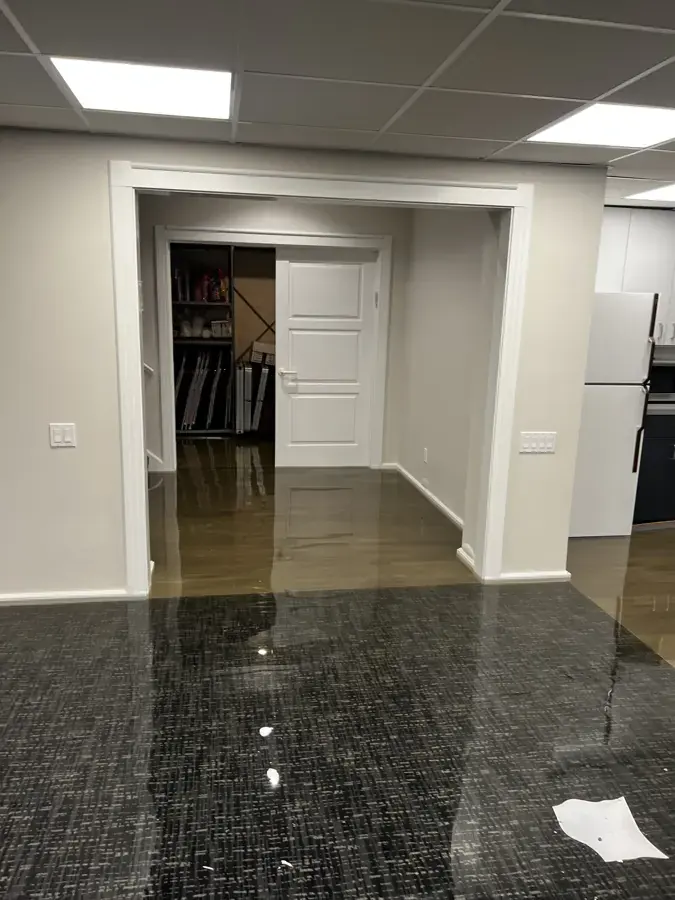
First steps for finished basement flooding cleanup in Franklin
- 1
Stay out of deep water
Water near outlets or a furnace can be live, so stay upstairs until power is off.
- 2
Cut the power
Shut lower-level breakers only if the panel is dry.
- 3
Stop what you can
Close the main valve for a supply leak. Rain or river water needs a pump.
- 4
Raise belongings
Carry electronics and boxes up and prop furniture on foil or blocks.
How finished basement flooding cleanup is handled in Franklin
Pumping the level first
The extraction crew lowers standing water in steps and then works the carpet and pad with wand tools until the discharge runs clear.
Deciding what stays
Drywall soaked by clean water can sometimes dry in place, while wet insulation, soaked pad and anything touched by river or sewage water comes out.
Cutting wall cavities
Flood cuts a set height above the visible water mark open the stud bays so the air movers can dry the framing behind finished walls.
Dry from the slab up
The drying team stages dehumidifiers and air movers, closes the stairwell to hold the dry air in and logs readings daily.
What does finished basement flooding cleanup cost in Franklin, TN?
Finished basement flooding cleanup in Franklin usually runs $1,800 to $16,000. A single room sits low, a whole lower level sits in the middle and sewage in the basement sits at the top.
The drivers are the water category, the square footage that got wet, the material class and how fast drying started. The water damage cost calculator gives a planning range; a firm number comes after the walkthrough.
How finished basement flooding cleanup moves from wet to dry
- 1
Pump the level
Standing water comes out in controlled stages.
- 2
Sort materials
Salvageable and ruined items get separated.
- 3
Open the walls
Flood cuts expose wet stud bays.
- 4
Dry it out
Equipment runs until framing reads dry.
A finished basement hides a lot of absorbent material, from carpet and pad to drywall and insulation, and each one holds water differently. The restoration team sorts them before any equipment is set.
How water reaches a lower level in Franklin
Franklin spreads along the Harpeth River and its tributaries, and a creek behind homes on Warrior Drive overflowed in August 2026. Heavy runoff, a rising creek, a failed pump or a split supply pipe can all end up in the same finished room.
The source matters because it sets the category, and the category sets what has to be thrown out.
In a finished space the carpet, pad and drywall all sit against the slab and the wall bases, so a modest flood can spread farther than the visible stain suggests. Sump pump failure cleanup covers one common route for that water.
What comes out and what can stay
Moisture meters, not appearance, decide each item.
- Insulation and pad that soaked up water usually go.
- Drywall touched by clean water may dry in place when readings fall.
- Anything reached by river or sewage water is removed under containment.
Drying the framing behind the walls
Water wicks up drywall and into the bottom plate. Structural drying keeps equipment running until studs and slab read dry, which is what stops the hidden damp that leads to mold.
Emergency dispatch for Franklin, TN
The restoration crew dispatches day or night for flooded finished lower levels across Franklin neighborhoods.
Finished basement flooding cleanup across Franklin, TN
Crews serve all of Franklin in ZIPs 37064, 37067 and 37069, from Downtown Franklin and Main Street out to Cool Springs and the neighborhoods around Mack Hatcher Memorial Parkway.
See every area servedFinished Basement Flooding questions in Franklin, TN
Water still coming in?
The Franklin restoration crew dispatches day and night, weekends and holidays included.
Describe the damage to a Franklin proCan a finished basement be saved after flooding?
Often, yes. Clean-water losses caught early can dry in place, while river or sewage water means removing the porous materials it touched.
How long does a lower level take to dry?
Three to five days covers many clean-water cases. Thick framing, a deep flood or a full lower level can take longer, and readings decide when equipment leaves.
Should I run my own fans?
Fans alone move damp air around without removing the moisture from drywall and framing. Dehumidifiers and meters are what finish the job.
Why is drywall cut above the visible water mark?
Wet drywall wicks upward. Cutting a little higher than the visible mark exposes the cavity so it can dry instead of staying damp inside the wall.
Is carpet in a basement always thrown out?
Not always. Clean-water carpet with a soaked pad can sometimes be lifted and dried, but carpet that sat in river or sewage water is removed.
Will insurance pay for basement flooding?
A burst pipe or other sudden release is usually a homeowners claim, while rising water outside the home generally needs flood coverage. Confirm with your insurer.
Lower level flooded in Franklin?
Call now. The extraction crew empties the space, and the drying team works from the slab up to the drywall.