Basement Flooding Cleanup in Forest Hills, TN
The restoration team clears water from a finished lower level, cuts drywall only above the water mark and dries the slab, studs and flooring to the IICRC S500 goal before anything is rebuilt.
(888) 849-5796Get the lower level pumped out- Flood cuts
- Slab to ceiling drying
- Hillside runoff know-how
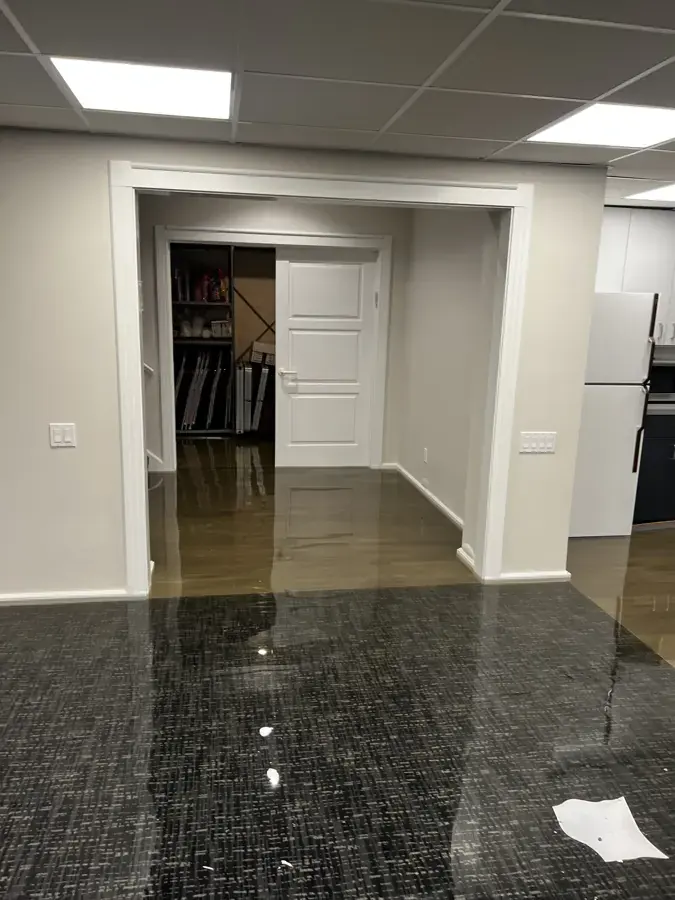
First steps for finished basement flooding cleanup in Forest Hills
- 1
Stay out of the water
Live outlets can hide under flooded floors, so skip wading in until power is off.
- 2
Cut power at the panel
Switch off breakers for the wet level only if the panel is dry.
- 3
Move what is dry
Carry electronics, boxes and photos upstairs before the wet reaches the shelves.
- 4
Take pictures
Film the depth and the damaged finishes while the water is still visible.
How finished basement flooding cleanup is handled in Forest Hills
Reading the lower level
The walkthrough tech maps moisture across the slab, walls and ceiling below, since water climbs drywall by wicking above what the floor shows.
Clearing the water
The extraction crew pumps out the standing volume and lifts carpet and pad that sat in it, so the drying team can see the slab.
Cutting above the wet mark
Drywall that stayed wet or swelled is cut out above where the water reached. Insulation behind it is pulled, and clean studs are left open to dry.
Drying the slab and framing
Dehumidifiers and air movers run in the closed-off space until concrete, plates and studs read within range, because a damp slab keeps feeding the room.
What does finished basement flooding cleanup cost in Forest Hills, TN?
Finished basement flooding cleanup in Forest Hills usually costs $3,000 to $9,000. A single carpeted room sits low, while a full lower level with flood cuts and built-ins sits high.
The drivers are the water category, the square footage that got wet, the material class and how fast drying started. The water damage cost calculator gives a planning range; a firm number comes after the walkthrough.
How finished basement flooding cleanup moves from wet to dry
- 1
Find the edge
Meters trace where the wet stops.
- 2
Pump it out
Standing water leaves the lower level.
- 3
Cut and clear
Wet drywall and pad come out.
- 4
Dry the slab
Concrete and studs dry to the goal.
A finished lower level holds a lot of material that water loves: carpet, pad, drywall, trim and insulation. In Forest Hills, where most of the city is steep wooded hillside, downhill runoff is a common way for that water to arrive.
Why slopes and lower levels clash
A hard storm sends water downhill toward foundations, driveways and lower-level doors, and the city has posted notices about high winds and heavy rain in a short time. A room set below ground has nowhere to send it.
Concrete holds moisture long after the puddles are gone, which is why structural drying continues until slab and framing both read dry.
Clean water or creek water
Where the water came from sets the plan. A failed pump or a supply break gives clean or gray water that finished materials can sometimes survive, while runoff from outside is Category 3 and the porous materials it touched are removed.
- Sump pump failure cleanup covers a pit that overflowed.
- Storm and creek flood cleanup covers water from outside.
- Sewage cleanup covers a backup through the floor drain.
Rebuilding comes after drying
Mitigation stops the damage and leaves the lower level dry with a written record. Replacing carpet, drywall and trim is repair work, and insurers often treat it as a separate part of the claim.
Emergency dispatch for Forest Hills, TN
Restoration crews dispatch day and night to Forest Hills lower levels flooded by runoff or failed pumps.
Finished basement flooding cleanup across Forest Hills, TN
The restoration team covers all of Forest Hills in ZIPs 37215 and 37220, from the Tyne Boulevard neighborhoods to the ridges off Hillsboro Pike and Old Hickory Boulevard.
See every area servedFinished Basement Flooding questions in Forest Hills, TN
Water still coming in?
The Forest Hills restoration crew dispatches day and night, weekends and holidays included.
Describe the damage to a Forest Hills proCan a finished lower level in Forest Hills be saved after flooding?
Often the structure can, because slab, studs and framing dry with the right equipment. Carpet, pad and drywall that sat in dirty water usually cannot be saved.
Does all the drywall have to come out?
No. The crew cuts above the water mark when drywall stays wet or swells. Panels touched only by clean water sometimes dry in place when readings keep falling.
How long does a flooded lower level take to dry?
Three to five days covers many contained losses. A deeper flood or a thick slab can add time, and the drying-time estimator gives a planning range.
Why does the room smell damp days later?
Moisture is still sitting in the concrete, the pad or the wall cavities. Mold can begin within 24 to 48 hours, so the smell is a reason to keep the equipment running.
Will homeowners insurance cover basement flooding?
It depends on how the water got in. A sudden internal failure is often covered, while water coming from outside usually needs flood insurance. Your own insurer can confirm the terms.
Should I wait for the ground to dry before calling?
No. Water in finished materials keeps doing harm while the yard dries, so extraction and drying start as soon as it is safe to enter.
Lower level flooded in Forest Hills?
Stay out of the water until the power is off, then call. The team pumps the room out and dries the slab.