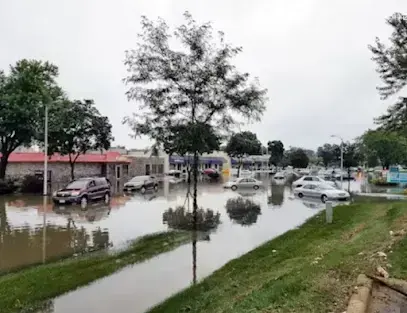
Nolensville was built along Mill Creek, and storms can still push water into yards, garages and lower levels. A heavy storm in July 2026 flooded parts of town, and the creek gauge has read above flood stage before. Cleanup in a newer home depends on getting the water out first.
Key takeaways
- The Mill Creek gauge at Nolensville has a flood stage of 13 feet and read 14 feet and rising in March 2021.
- Storms reported on July 20, 2026 flooded parts of Nolensville, and police urged drivers to avoid Stonebrook Boulevard at Nolensville Road and Kidd Road at Whitney Park.
- Standing water is extracted before any drying equipment goes in.
- Storm water carries mud and bacteria, so soaked porous materials are removed.
- Newer homes still need moisture readings behind drywall, in cabinets and under flooring.
Why Mill Creek matters to a Nolensville homeowner
Nolensville sits in the northeast corner of Williamson County and is mostly flat with a few hilly areas. The town was built along Mill Creek, which gives it a creek to watch when storms stack up.
The USGS gauge on Mill Creek near Nolensville reports a drainage area of 40.53 square miles. Flood stage at that gauge is 13 feet.
In March 2021 the gauge read 14 feet and rising at midnight on Sunday, above the 13 foot flood stage. That reading is a reminder of how quickly a creek can leave its banks in a heavy rain.
The July 2026 storms
Storms over the weekend reported on July 20, 2026 flooded parts of Nolensville. Nolensville Police urged drivers to avoid Stonebrook Boulevard at Nolensville Road and Kidd Road at Whitney Park.
Road warnings like those are a useful signal for homeowners. Water that covers a roadway is often moving across nearby yards, driveways and garage floors at the same time.
- Check the garage and the lowest door first, since water collects there.
- Look at the walls just above the baseboards for dark stains.
- Look for water pooled in window wells and against the foundation.
- Note the time, the rainfall and the high water mark for the record.
First steps after storm water enters
The first priority is safety, then stopping further damage.
- Stay out of standing water until the power to the area is shut off.
- Wear boots and gloves, since storm water carries mud and bacteria.
- Move rugs, shoes and boxes out of the wet area.
- Photograph the high water mark on walls and furniture before anything moves.
- Call for extraction so the water does not soak into drywall and cabinets.
Water from outside is not clean water
Runoff that crossed yards and streets picks up soil, fertilizer and bacteria. Once it is inside, the soaked carpet, pad and insulation are treated as contaminated.
That is why storm and creek flooding cleanup removes porous materials instead of drying them in place.
Extraction comes first
A room with standing water cannot dry. The crew pumps or vacuums the water out, then moves to what the water soaked.
Water extraction in Nolensville clears the standing water and pulls the water from carpet before it wicks up into drywall.
In a newer home with a finished lower level, that includes the media room, the closets and the space under the stairs.
- Standing water is pumped out first.
- Wet carpet and pad are cut out and removed.
- Baseboards come off so the wall bottoms can vent.
- Wet drywall above the high water mark is cut out.
- Floors and framing are cleaned and disinfected.
Drying a newer home properly
Many Nolensville subdivisions are newer developments built since the 1996 re-incorporation, including Bent Creek, Winterset Woods, Burkitt Place, Silver Stream, Ballenger Farms, Sunset Farms and Summerlyn.
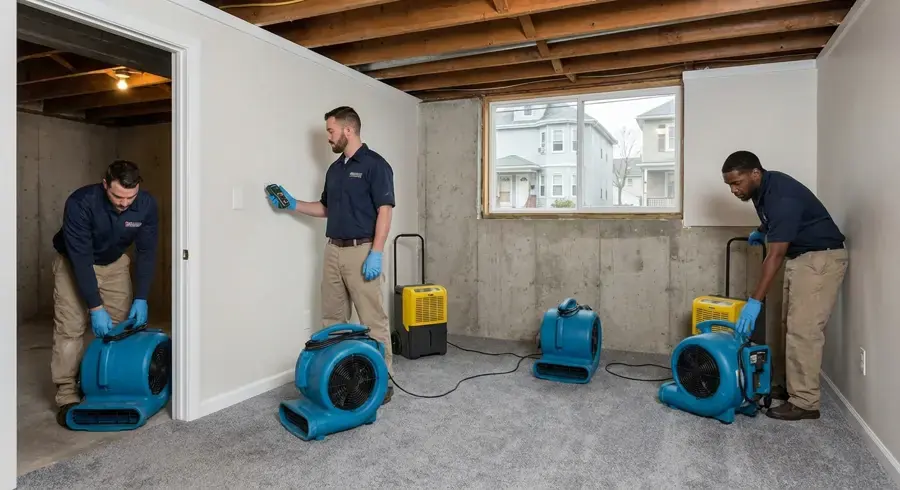
Newer construction is tight, so moisture that gets behind drywall has little room to escape. A wet wall that looks fine on the surface can still hold water at the bottom plate.
Dehumidifiers and air movers are placed from readings, and the crew checks drywall, framing and subfloor until they match the dry standard.
The 24 to 48 hour window
Wet materials left in place past the 24 to 48 hour window can start to support mold. That is one reason the crew gets the equipment going as soon as the water is out.
Daily readings show when each room is dry and when the equipment can come out.
Garages, yards and lower levels
Water from a storm tends to enter a Nolensville house in a few predictable places. Garages come first, since the floor is low and the door often seals poorly against a sheet of moving water.
Window wells and walkout doors on a lower level come next. Water that pools against a foundation can find a crack or a door threshold and spread across a finished floor.
For the full list of loss types the crew handles in town, the Nolensville water damage restoration page lays out the services.
- Garages: stored boxes, cabinets and drywall at the base of the walls.
- Walkout and lower level doors: carpet and baseboards nearest the door.
- Window wells: drywall under the sill and any built in shelving.
- Yards: pooled water near the foundation after the rain stops.
Contents, cabinets and what can be saved
Storm water soaks the materials it touches differently. Solid wood and hard surfaces can usually be cleaned and kept, while porous items tend to be lost.
Cabinet bases in a kitchen or bath often hold water behind the toe kick. The crew removes the kick and dries the base before decisions are made about replacing it.
- Upholstery, mattresses and rugs that sat in storm water are usually discarded.
- Solid wood furniture can often be cleaned and dried.
- Electronics that sat in water should not be plugged in until checked.
- Photographs and papers can sometimes be dried by a document specialist.
Records for the insurer
Storm losses create a record that matters later. Photos at the start, a list of affected rooms and the drying logs together make the claim easier to follow.
The homeowner can note the town warnings about Stonebrook Boulevard, Kidd Road and the July 2026 storms as part of the date and cause of loss, since they are public.
- Photos of every wet room and the high water mark.
- A list of damaged contents.
- Drying logs and moisture readings.
- Receipts for emergency work.