A frozen pipe often hides its damage until the thaw. A March 2026 report said Winter Storm Fern left thousands of people in Rutherford County dealing with frozen pipes, roof damage and long repair delays, and it named La Vergne among the affected communities. Water damage from a split pipe is worked in a set order.
Key takeaways
- Frozen pipes usually split while frozen, but the water does not run until the pipe thaws.
- The order of work is shut off the water, extract, open the wet walls, then dry the structure.
- Long repair delays after Winter Storm Fern made quick shut off and moisture control more important.
- Wet insulation, drywall and carpet pad are removed, while framing and subfloor are dried in place.
- Daily moisture readings show when drying is finished, not how a room looks or feels.
Why leaks from frozen pipes show up on the thaw
Water expands as it freezes, and that pressure can split a pipe or push a joint apart. While the pipe is frozen, the ice acts like a plug and the split can go unnoticed.
When temperatures rise, the ice melts and water flows through the opening. A small crack can run for hours inside a wall, ceiling or crawl space before anyone sees a stain.
La Vergne has more than 65 neighborhoods and 11,612 housing units, so frozen pipe breaks after a deep freeze can show up in houses, apartments and condominiums alike.
What Winter Storm Fern did in Rutherford County
A March 2026 report said Winter Storm Fern left thousands in Rutherford County dealing with frozen pipes, roof damage and long repair delays, and it named La Vergne among the affected communities.
Repair delays matter to water damage. A plumber who cannot come for several days leaves a wet house sitting, and wet drywall and insulation do not wait.
The Tennessee Department of Commerce and Insurance has also said many of its recent complaints were tied to Winter Storm Fern.
Step one: stop the water
The fastest way to limit damage is to find the main shut off and close it.
- Find the main water valve and turn it off.
- Open a faucet on the lowest floor to drain what is left in the pipes.
- Turn off power to wet rooms if water is near outlets or fixtures.
- Photograph the leak, the stain and the wet area.
- Call a plumber for the repair and a restoration crew for the water.
Where thaw leaks hide
Splits often hide behind exterior walls, in attic runs, under sinks on outside walls and in garages. The water follows framing and can show up far from the split.
A stain on a ceiling can point to a break in the attic, while a wet baseboard can mean the wall cavity is already full.
Step two: extraction and moisture mapping
Once the water is off, the crew removes what is standing and maps where moisture has traveled.
Frozen pipe cleanup in La Vergne starts with extraction from carpet and floors, then uses moisture meters and thermal imaging to find water behind walls.
The map tells the crew which materials can be dried and which must come out.
- Standing water is extracted from floors and carpet.
- Moisture meters check drywall, baseboards and framing.
- Thermal imaging shows wet areas behind walls and under ceilings.
- Wet insulation and soaked ceiling drywall are removed.
Step three: open the wet walls
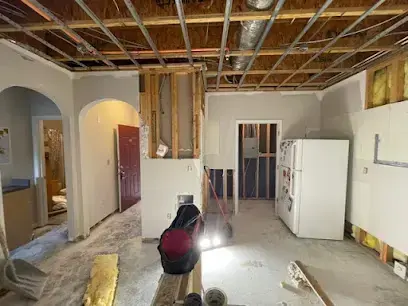
Drywall that stays wet loses strength and can become a place for mold to start. The crew cuts access holes or opens the wall at the bottom, so the cavity can air out.
Straight, square cuts make the later repair easier.
- Baseboards are removed so wall bottoms can vent.
- Wet insulation is pulled out and bagged.
- Soaked drywall is cut a few inches above the wet edge.
- Framing is left in place to dry.
Floors, cabinets and hardwood
The floor above the split is often the first thing homeowners notice, and it is the most expensive part of the repair if it is handled late.
Water that runs from a wall into the floor can soak carpet pad, laminate and the subfloor under them. Hardwood absorbs water through the seams and can cup within days.
- Carpet pad that sat in water is removed, while carpet may be cleaned and dried if the water was clean.
- Laminate and engineered flooring that swell are usually replaced.
- Hardwood can sometimes be saved with drying mats if the water is caught early.
- Cabinet bases are vented by removing the toe kick so the cavity can dry.
Why quick drying matters here
Wood and drywall dry more slowly the longer they stay wet, and some materials will not recover. Starting extraction early gives hardwood and cabinets a much better chance of coming through.
This is also true after a long repair wait. A house that is dry while the plumber is still booked is far better off than one that sat wet.
Keeping the house dry during repair delays
When repair crews are busy, a water damaged house can sit for days before the plumber arrives. The restoration crew can still do the water side of the job without waiting.
Shutting off the main, extracting, opening the wet walls and starting the drying equipment all protect the house in the meantime.
- Keep the main water valve closed until the pipe is repaired.
- Keep drying equipment running without a gap, since stopping it lets walls re-wet.
- Heat the house to a normal indoor level so the equipment can work.
- Ask the plumber to confirm the repair before the main is reopened.
Step four: dry the structure
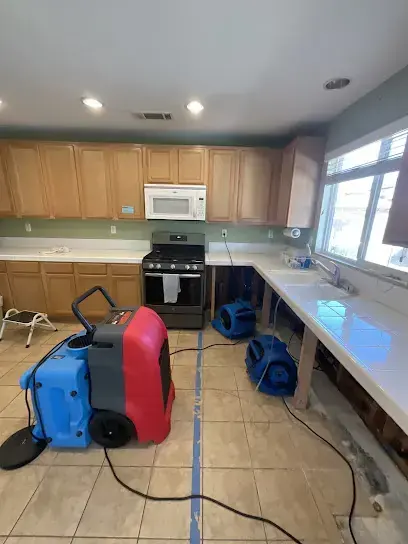
Structural drying in La Vergne places dehumidifiers and air movers where the readings call for them. The aim is to bring wood and drywall back to a dry standard, not just to dry the surface.
The crew returns to read moisture daily, moving equipment as areas dry.
The drying stays in place until the readings match the dry standard. Rushing the end of drying can leave water in framing that surfaces later as stains or odor.
When the break is in the attic or ceiling
A split in an attic pipe sends water through insulation and down into ceilings. Wet insulation is removed, and the ceiling below is opened so the cavity can dry.
The room below also gets its own extraction and drying, since water often reaches floors on the way down. A burst pipe cleanup follows the same steps.