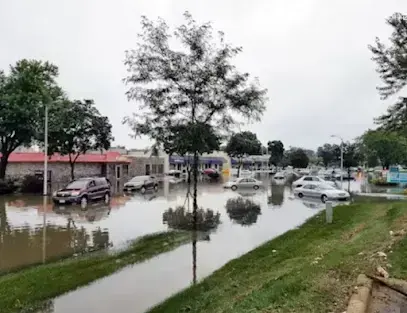
Franklin grew up on both sides of the Harpeth River, so river and creek flooding is part of the local picture. When that water gets inside a house, it brings mud, bacteria and a lot of volume, and the order of the first steps decides how much of the house can be saved.
Key takeaways
- The Harpeth River crested at 35.32 feet in downtown Franklin in May 2010, above the 35.14 foot record set in 1948, and reached 30.5 feet on March 28, 2020.
- River and creek water is contaminated, so it is cleaned up as flood water, not as a simple plumbing leak.
- Standing water has to be extracted before drying equipment can do any useful work.
- A flash flood from a small creek, like the one behind homes on Warrior Drive in August 2026, can fill a yard and a lower level quickly.
- Photos, readings and a written record of the order of work help the claim.
Why Franklin homes see river and creek water
The city developed on both sides of the Harpeth River, a tributary of the Cumberland River.
The National Weather Service says Harpeth River flooding in downtown Franklin affects roads, homes and businesses between W Main St and Del Rio Pike, and between Boyd Mill Ave and Liberty Pike.
The 2024 Williamson County Hazard Mitigation Plan lists Del Rio Pike, Eddy Lane and Lewisburg Pike among roads that consistently flood. Those roads show where water tends to gather, even when a particular house sits on higher ground.
A property in an AE Zone is in the Special Flood Hazard Area, according to the city floodplain page.
FEMA maps can be viewed on the FEMA website and at the Williamson County Public Library, and an owner can look up a property before the next storm.
The floods that shape the local picture
Several dated events show the range of ways water has reached Franklin homes.
- May 1 and 2, 2010: a record 13.57 inches of rain fell on the Nashville region, and the Harpeth River crested at 35.32 feet in downtown Franklin.
- The same flood damaged about 1,500 residential and commercial structures in Williamson County and about $100 million in damage, according to Harpeth Conservancy.
- March 28, 2020: the river reached 30.5 feet, surrounding homes and roads, and Franklin Police reported rescuing a homeowner and about 18 other people who live along the Harpeth River.
- August 2026: a creek behind homes on Warrior Drive overflowed in a flash flood that lasted about 30 minutes, and a water rescue was dispatched. Neighbors said it brought back memories of the 2010 floods, and no one was hurt.
First steps when flood water enters the house
Safety comes before cleanup. Water that has been in a yard or street can hide electrical hazards and sharp debris.
- Stay out of rooms with standing water until the power to those rooms is off.
- Do not walk through or wade in moving water outside the house.
- Wear boots and gloves, and keep children and pets out of the wet area.
- Move rugs, cushions and small items to dry ground.
- Photograph the high water mark on the walls before anything is moved.
- Call for extraction so the water is removed before it wicks into drywall and cabinets.
Why flood water is different from a pipe leak
Water from a burst pipe starts clean. River and creek water carries soil, bacteria and whatever it passed over on the way, so porous materials it touches are usually removed.
That is why storm and creek flood cleanup follows a heavier method than a plumbing job.
Extraction comes before drying
Drying equipment cannot dry a room that is still holding water. The crew removes the standing water first, then moves to what the water soaked.
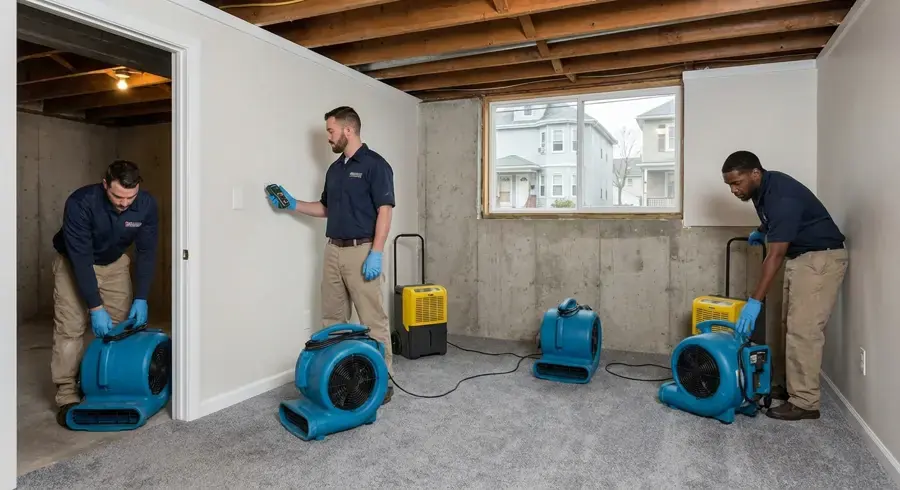
Water extraction in Franklin uses pumps and truck mounted equipment to clear standing water and to pull water from carpet and pad before they are taken out.
Silt is the other half of the job. River water leaves a fine mud film on floors and in corners, and it has to be shoveled and washed away before surfaces can be disinfected.
- Standing water is pumped out and the floor is scraped clean.
- Wet carpet, pad and soaked insulation are removed.
- Drywall that wicked water above the high water mark is cut out.
- Hard surfaces are cleaned and treated with an antimicrobial.
- Dehumidifiers and air movers run until readings come down to dry standards.
How long the drying takes
Drying time depends on how high the water rose, how long it stood and what the house is built of. A shallow loss in one room moves faster than a whole lower level.
Moisture left in framing past the 24 to 48 hour window can start to support mold, so equipment goes in as soon as the water is out.
Structural drying is logged with daily readings so the crew can show when each material reaches dry.
Hidden damage after the water drops
A river flood does not end when the water recedes. The harder part is what the water left in places nobody can see.
Water that rose through a floor can sit in wall cavities, under cabinets and inside ductwork for days. Silt settles into the bottom plate of exterior walls, and wet insulation stays wet.
- Wall cavities that look dry on the surface but still read wet at the bottom.
- Cabinet bases and toe kicks, where water and silt collect.
- Hardwood that cups or buckles as it dries unevenly.
- HVAC ducts and equipment that sat in water and need to be checked before being run.
- Electrical outlets, panels and appliances that need an electrician before they are turned on.
Contents and electronics
Photograph damaged furniture, rugs and electronics before moving them. Do not plug in a television, computer or appliance that sat in flood water.
Porous contents, such as upholstery and mattresses that sat in river water, are usually discarded. Solid wood and hard surface items can often be cleaned and kept.
Documenting the loss for the claim
Flood losses involve more paperwork than a small plumbing leak. The record built on day one is the one an adjuster will want to see.
Franklin owners can check a property against the FEMA flood maps the city floodplain page points to, and keep a copy with the claim file.
- Photos of the high water mark and every affected room.
- A list of damaged contents, with photos.
- Drying logs and moisture readings from the crew.
- Receipts for any emergency work.
- The date and approximate time water entered the house.