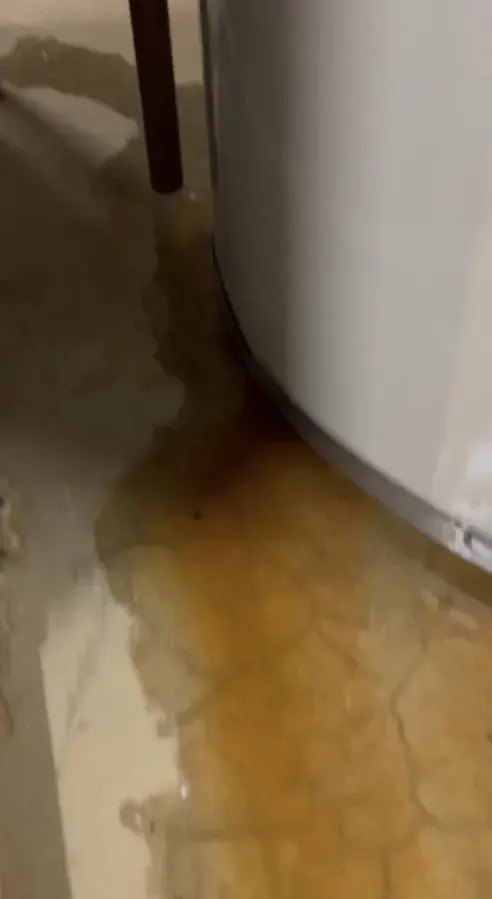
A tank water heater can release a full tank onto the floor and keep running until someone closes the valve. In a garage, closet or basement of a large Brentwood home, that water spreads fast. Late January 2026 resident reports of burst pipes and busted water heaters show it happens in cold snaps.
Key takeaways
- A failed tank can release a full tank of water at once and then keep filling until the cold water valve is closed.
- The location of the tank decides what gets wet: a garage slab, a closet wall, a basement floor or a ceiling below.
- The first steps are to shut off the cold water to the tank, turn off power or gas and photograph the area.
- The cleanup extracts the water, checks the walls and floors and dries what remains.
- A Nolensville town codes report says water heaters need a temperature and pressure relief valve and a discharge pipe.
What a tank failure looks like
A leaking tank can show as a puddle that grows slowly, or as a sudden flood from a split seam or a failed fitting. The tank holds a lot of water, and all of it can reach the floor.
Once the tank is empty, the supply keeps refilling it. That is why closing the cold water inlet is the first step, not the last.
Late January 2026 resident reports in Brentwood described burst pipes and busted water heaters during an ice storm, so cold snaps are a time to watch the tank and its connections.
Where the tank sits changes what gets wet
Location decides what the water can reach, and so it decides the cleanup.
- Garage: water spreads across the slab and into stored boxes, cabinets and the bottom of garage walls.
- Closet: water runs into the closet floor and the wall framing, then into a hallway or bedroom.
- Basement: carpet, pad and the lower walls of a finished room can soak.
- Attic or upstairs: water runs through the ceiling below and lands on two floors.
Why a closet is worse than a garage
A concrete garage floor is hard and nonporous, so water pools and can be extracted. A closet shares walls with living space, and water moves into drywall and flooring in the next room.
First steps when a tank lets go
Safety comes first, because water, electricity and gas share this part of the house.
- Close the cold water inlet valve on top of the tank.
- Turn off the power at the breaker, or set the gas control to off.
- Stay out of standing water if outlets or extension cords are nearby.
- Move boxes and furniture out of the wet area.
- Photograph the tank, the puddle and the walls.
- Call a plumber for the tank and a restoration crew for the water.
What the extraction crew does
Water extraction comes first, because standing water from a tank can run for a long time. The crew removes the water from the floor, then checks where it went.
In a garage, that may be only the slab and a few inches of wall. In a closet or basement, the checks go behind baseboards and into the wall cavity.
- Standing water is pumped or vacuumed out.
- Baseboards are pulled so the wall bottoms can vent.
- Wet carpet and pad near the tank are removed.
- Wet insulation is removed, not dried in place.
- Drywall that wicked water is cut above the wet edge.
How clean the water is
A tank leak is mostly clean water, so most of the work is extraction and drying. If the water sat for a long time or spread into a damp crawl space, the crew checks whether any materials need to be removed.
Drying the room and the walls
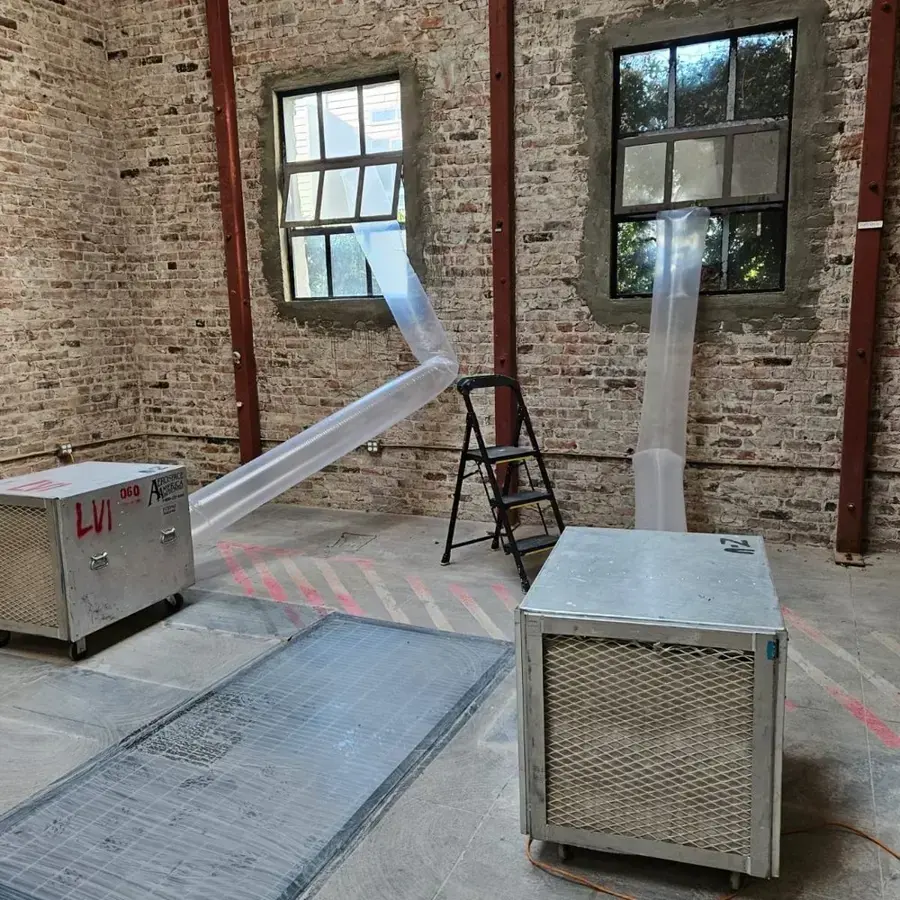
After the water is out, a restoration crew dries the room with dehumidifiers and air movers placed from moisture readings. Water heater failure cleanup covers the extraction, the wall checks and the drying together.
Concrete dries slowly, so readings on a garage slab are checked for several days. A wall that reads wet at the bottom gets more airflow or an opening to vent.
Wet materials past the 24 to 48 hour window can begin to support mold, so the equipment goes in as soon as the water is out.
A Nolensville note on relief valves
Nolensville town codes require an approved temperature and pressure relief valve and a relief valve discharge pipe on water heaters, according to a town building codes report.
That detail points at a common leak source. A valve that drips or a discharge pipe that runs often signals a tank under pressure or a valve that needs replacing.
Plumbing work in town is covered by the single residential building permit application, submitted through GeoCivix. The Nolensville water heater failure page and the town hub at Nolensville water damage restoration cover the cleanup side.
- A drip at the relief valve is worth a plumber visit.
- A discharge pipe that is wet or stained points to a valve that has opened.
- Rust at the base of the tank is a sign of a leak.
- A tank that rumbles or pops may have sediment buildup.
Why cold snaps make tank problems worse
Cold weather leans on every part of a plumbing system. Pipes near a tank can freeze and split, and a tank in an unheated garage works harder to keep water hot.
The late January 2026 resident reports in Brentwood described burst pipes and busted water heaters during an ice storm. A split pipe beside the tank and a failed tank can happen together, so the water may come from two places.
A restoration crew checks both. The goal is to find every source, since drying one room while another keeps leaking is wasted work.
- Check the pipes within reach of the tank for frost or bulges.
- Keep the garage door closed in a hard freeze.
- Know where the main water valve is.
- Listen for hissing or dripping near the tank after a freeze.
After the cleanup
Once the area is dry, the tank is replaced or repaired by a plumber. The restoration team is a separate call, and the two jobs can run side by side.
Keep a record of the failed tank, the date and the drying logs for the insurer.
- Photos of the tank, the puddle and the walls.
- The plumber's invoice and the failed part, if kept.
- Drying logs and final readings.
- Receipts for emergency work.